- Jun 16, 2024
Preparing For Mustang Adoption: What To Do (and Not Do)
- Amanda Whitmire
- 0 comments
Here in this section we talk about the two easiest ways to achieve your dream of owning a wild mustang: adopting one straight from the corral, or working with a mustang gentling trainer to adopt/purchase your gentled mustang! Then we will talk about the differences in mustangs and domestic horses, and how to get the dream mustang of your choice home finally!!
How To Adopt Your Own Previously Wild Mustang
Here is information directly from the BLM website:
The BLM maintains a network of permanent off-range corrals and hosts hundreds of off-site adoption events each year to find homes for excess animals. Qualified adopters must meet standard requirements for owning and caring for a wild horse and burro, including specific facility parameters to ensure the safety and health of the animals. Purchasers must meet other requirements as well and certify they will provide a good homes to their purchased animal. In general, whether adopting an animal at an off-site event or purchasing one from a permanent off-range corral, prospective owners should follow the steps outlined below.
To adopt or purchase an animal over the Internet, visit the Wild Horse and Burro Online Corral.
1. Requirements: Ensure you meet the standard requirements for adopting or purchasing a wild horse or burro. You can find requirements in the Important Documents section of this webpage. Visit our Sales Program page for information on the process to purchase a sale-eligible wild horse or burro.
2. Find an event or location near you: Contact your preferred off-range corral location or make plans to visit an upcoming off-site adoption event near you. Each facility may have additional requirements beyond what is stated in the application; it is recommended that you contact your preferred corral and visit the facility’s website for more information. The BLM also hosts periodic adoption/sale opportunities on the Online Corral.
3. Application: Complete an adoption application or sales application and mail/fax it to your local BLM office, or bring it with you to the appointment or event. You will also be able to complete an application at the facility or onsite at the event or facility.
4. Appointment: Arrive at the facility for your appointment or visit the event during the stated hours for viewing and adopting/purchasing animals.
5. Pick-up: Arrange for payment and pick up of your wild horse or burro directly from the facility or event. Generally, the new owner is responsible for all transportation costs for the animal. If you are unable to provide transportation from the facility, consider adopting or purchasing an animal during a scheduled competitive bid event on the BLM’s Online Corral, which may have a drop-off location that is more conveniently located.
Adoption Incentive Program (Part of Adopting Directly)
To encourage more adopters to give a wild horse or burro a good home, the Adoption Incentive Program provides up to $1,000 to adopt an untrained wild horse or burro from the BLM. The goal of the program is to reduce BLM’s recurring costs to care for unadopted and untrained wild horses and burros while helping to enable the BLM to confront a growing over-population of wild horses and burros on fragile public rangelands.
The Adoption Incentive Program allows qualified adopters to receive up to $1,000 when adopting an eligible wild horse or burro on or after March 12, 2019. Under this program, adopters are eligible to receive:
$500 within 60 days of adoption of an untrained wild horse and burro
$500 within 60 days of titling the animal.
The incentive is available for all untrained animals that are eligible for adoption, including animals at BLM facilities, off-site events and on the Online Corral. A $25 fee applies at the time of adoption.
BLM Sale Authority Program (Like Adopting Directly, Except Buying the Horse Instead of Adopting)
Wild horses and burros more than 10 years old – as well as younger animals that have been offered for adoption at least three times – are eligible for sale. (This means if you choose a sale authority horse you will not get the adoption inventive money.) Purchasing a wild horse or burro means that ownership of the animal passes immediately from the federal government to the buyer, instead of having the one year adoption before gaining title of the animal. (Note: It has been and remains the policy of the BLM not to sell or send any wild horses or burros to slaughter.) Proceeds from the sales of wild horses and burros are used for the BLM's wild horse and burro adoption program, as directed by Congress.
The Ultimate Easiest Way to Adopt (in my opinion) - Working with a Mustang Gentling Trainer
Working with a mustang gentling trainer has been the most successful way that I have found to adopt one so far. "The Mustang Heritage Foundation created the Trainer Incentive Program, which is better known as TIP, to bridge the gap between the public and excess wild horses held in off-range corrals. This program supported a network of hundreds of horse trainers who gentle, train and find homes for wild horses and burros. As of 2019, TIP had helped find homes for more than 10,160 wild horses and burros and supported a network of 1,175 approved trainers in 47 states."
Many former TIP trainers are now simply referred to as mustang gentling trainers, and these trainers gentle and halter train a Bureau of Land Management-branded wild horse or burro, then market and find a new home for the animal. Instead of being reimbursed for their training from the BLM, they now negotiate directly with future mustang owners and work out the financials for boarding and training.
You likely won't get the $1000 incentive you'd get for adopting from the corrals, but what you will get is a horse gentled and used to humans already through the trainer!
These mustang gentling trainers pick up wild mustangs from the corrals and can usually, (although each horse is different!) within 90 days, halter the horse, lead the horse around, pick up all four feet (for cleaning/trimming later on), and load the horse in and out of a trailer safely. Once the trainer completes these requirements, they search out an adopter who is a perfect match for the horse. Expect to pay for the boarding/training of your mustang while it is with the gentling trainer. Some of the mustangs are adoptable, meaning you do have to own the horse for a year before applying for a title from the government and officially owning it, but some are "sale authority" horses which do not require adoption paperwork.
I am a mustang gentling trainer with a waiting list for adoption, so I only have one horse at a time in for gentling. Feel free to email amanda@whitmiremustangs.com if you'd like to be added to the adopter interest list!
Trailering Your New Mustang - Bringing Them Home
HERE is a great resource to explain more about how to prepare for your wild horse or burro to come home when it comes to feeding and caring for it!
Once you have chosen your mustang, filled out paperwork, been approved and have made plans to bring home your new mustang, you will need to find transportation for it. Many horses are transported in trailers all across the country every day, and there are many reputable professional haulers you can hire for around $.50 to $2.00 per mile! You can google nearest equine transportation and call to ask for references before you hire them! Make sure to note that they will be hauling a wild mustang, so they can come to the holding pen with a BLM approved trailer. BLM states that "Applicant must provide a stock or horse trailer with a rear swing gate and covered top. Provided the dividers are removed or folded back, three-horse slant trailers are acceptable. Drop-ramps are acceptable if there is an additional back gate to the trailer. Two-horse trailers approved on case-by-case basis. No one-horse trailers approved."
Do you feel ready to adopt your own mustang? Do you know if you want to work with a gentling trainer or pick up a wild one straight from the corrals? I can’t wait to help you in your gentling journey! Learn more in the next section about the differences in mustangs versus domestic horses, and how to build a great shelter for your new mustang!
How are Wild Horses Different Than Domestic?
"It breaks my heart to see our wild horses rounded up in droves. But, what is even harder to see is them sitting in jammed holding pens because they are “tough cookies”, “hard to handle” and “unbreakable”. What they really are is misunderstood. Apples and Oranges. Or maybe more clearly, Apples and Pears. They kinda look the same and kinda smell the same and kinda taste the same, but they are vastly different.
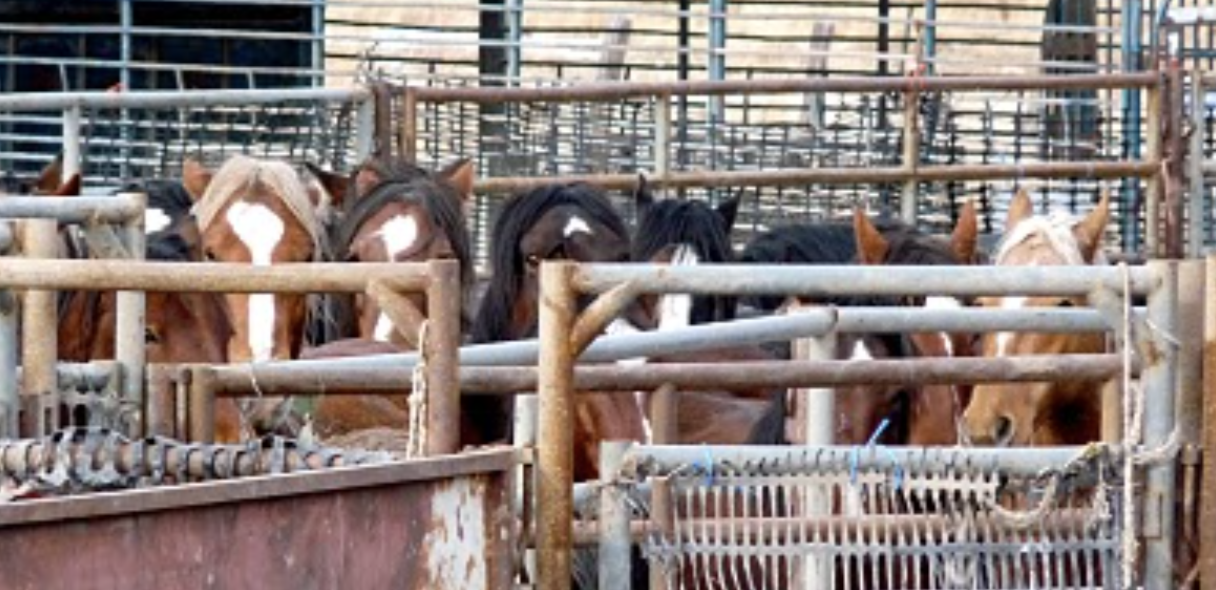
Wild horses are born to distrust in order to stay alive. They don’t look to us for food and have no predecessors that have had a relationship with humans. Wild horses don’t understand our body language and need a reason to bond with us. More to the point, wild horses have to find a reason to want to bond with us.
And what do we do? We treat them like rank domestic horses that just need to be broken.
But truly, the wild horses are just trying to survive and a human is an unknown threat. Since Mother Nature has had her hand in the creation of wild horses, what we have here are the best of the best in procuring wild horse safety. Yup, our wild horses aren’t going to give in without a fight because that is how they’ve survived. They know from their very being that flight and running is the best way out of any mess. Circle the Wagons and kick the bejessus out of the attacker!
Sadly, it is a rare human who has the understanding, compassion or patience to acknowledge the wonderful perfection of the genetic traits that create a successful wild horse. Who has the time, right? So, it is a vicious cycle.
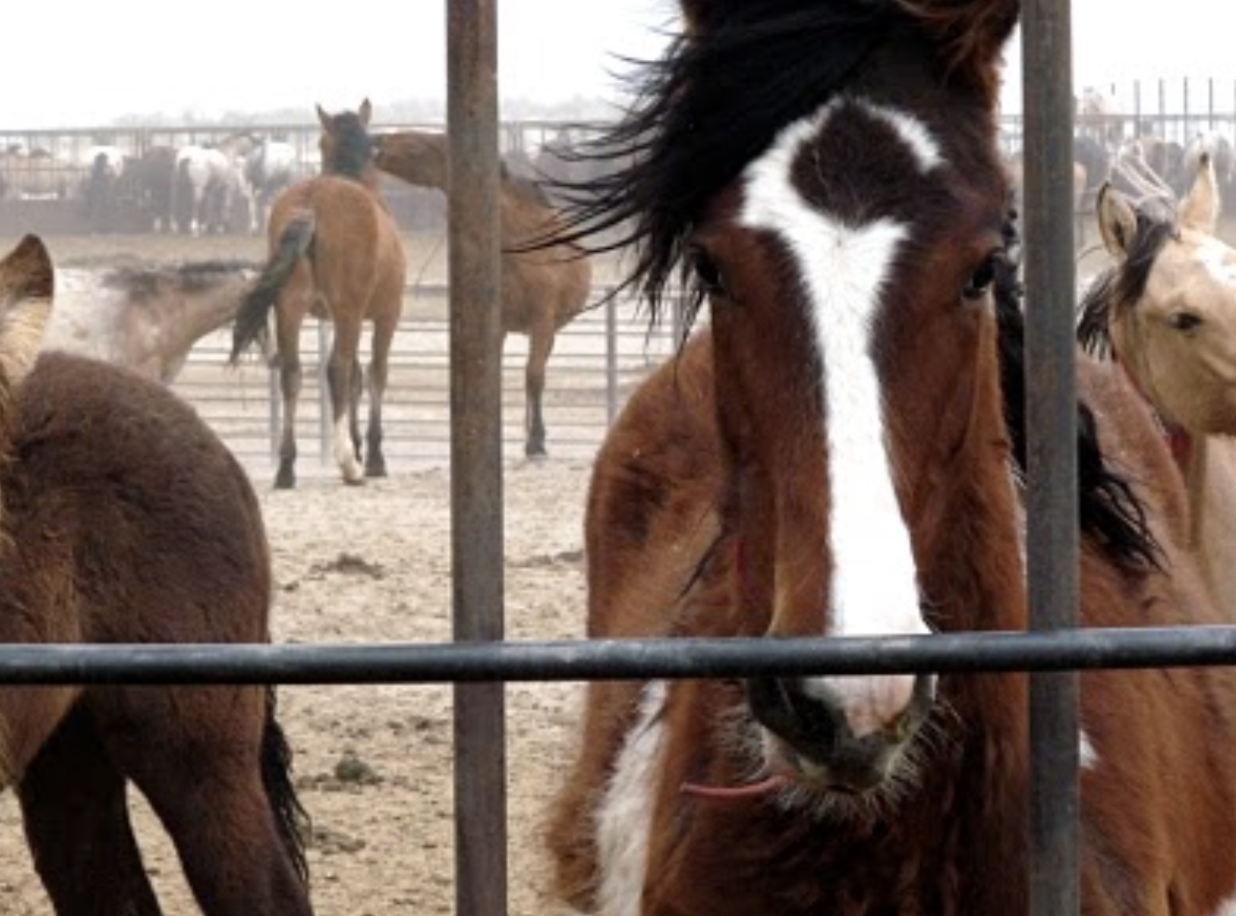
A Wild horse sees no reason to befriend a human who is not befriending the wild horse.
Sadly, this is why there are so many of them that go unadopted. ... Poor unsuspecting people adopt these wild horses and are met with real and serious challenges. Hence, hardly any wild horses are adopted older than weanling/yearlings because it just is too much work for most people. So sad. Wild horses are not domestic horses. So, why are we treating them like domestic horses? Put a wild thing in a cage and it loses its heart. Give your heart to a wild thing and you are both uncaged." (This info is from THIS WEBSITE)"
Much of what is said on this site is very powerful and brings a clear message, we need to help these mustangs!! I personally believe that if we can teach more people how to communicate effectively with mustangs, more will be adopted out!! We have the opportunity to give them a loving home where they can stretch their legs, while not having to worry about battling the elements in search of food daily. We can find a middle ground and get these mustangs adopted!!
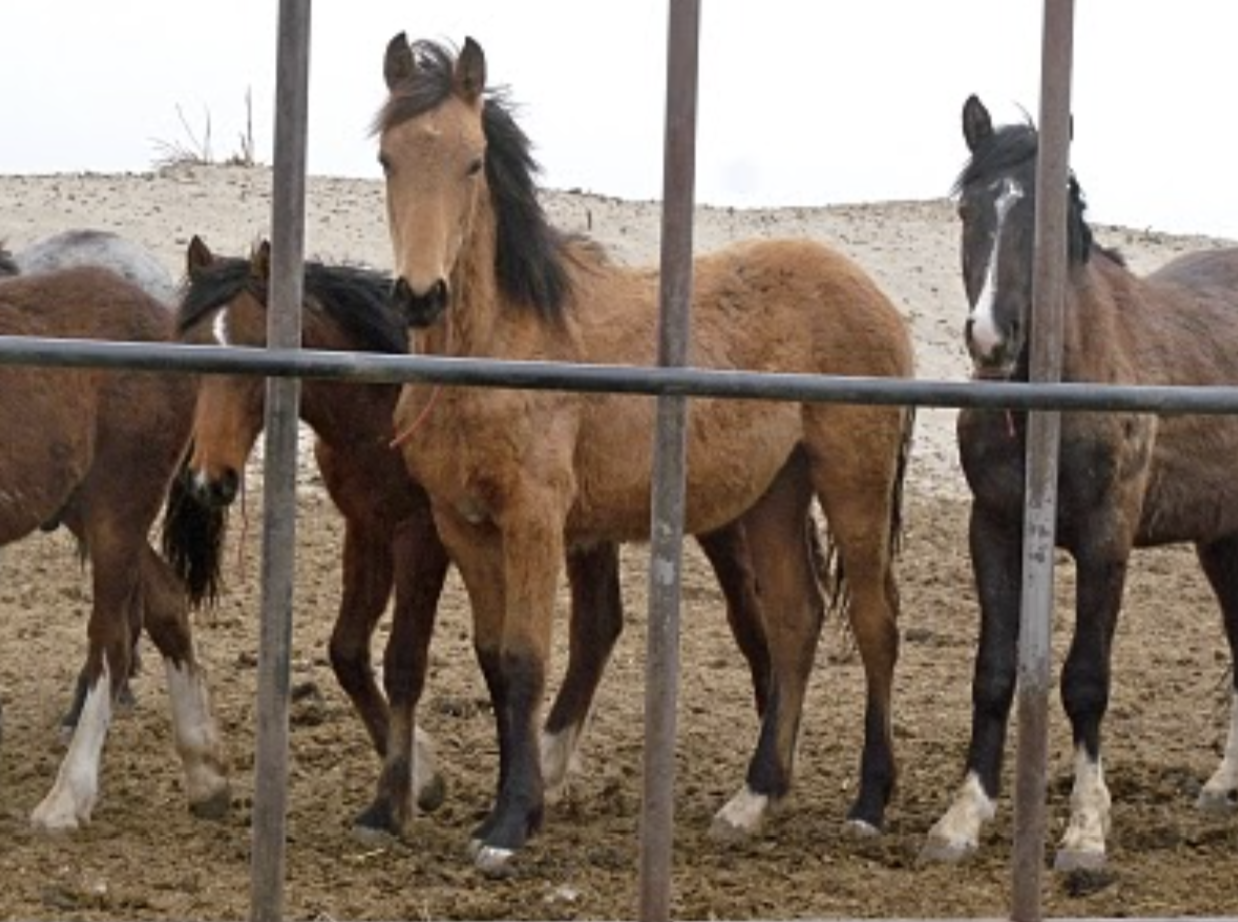
A mustang owner on Facebook by the name of Jules Cain wanted to add this section to explain a bit more about mustangs versus domestics and even domestics that are untouched. She says:
I've found that untouched domestic horses vs. wild mustangs are different by far. The majority of horses I've worked with are abused/neglected horses that can't be touched, but I've worked with quite a handful of untouched domestic horses. My first heart horse is actually an untouched domestic stallion🤣(picture).
They have a mindset that totally different, and after training they don't have a huge bond like mustangs do. They're not as scared, and don't learn as fast. They aren't up for changes, like if they where a reining horse they won't jump.
After training I've noticed that mustangs are literally the best horses you can have. You get so much reward and love in the end. With domestic untouched horses, it's not like that🤣 they don't care as much
It's really hard to work with both of them, especially for the first time. I was lunged at, kicked at, bit at and reared at with mustangs, wild domestics and just normal everyday horses. Knowing as much as possible isn't going to help all the way, so I DO NOT recommend horses like that for people who can't work with them at least 5 times a week, who have children around the horse(s), who haven't bought a horse before that, or someone who is less than a confident intermediate rider. I've seen/heard of too many accidents that returned that horse to a bad ending or to that person/people telling bad things about those horses. It's hard to tell people that mustangs aren't beginner-friendly or easy, yet hope everyone adopts one and they all get homes.
In the end I do believe they are the horses everyone should have, and learn with. I am in the process of making a sanctuary/rehab center for mostly BLM but really to all horses that we can save.
Hope this helps!!
24-Page Downloadable Guide
https://www.whitmirecoaching.com/mystery-of-the-mustang-guide
Part 1: Guide to Bringing Home Your First Horse
https://www.whitmirecoaching.com/blog/mystery-of-the-mustang
Part 2: The Ultimate Mustang Mission
https://www.whitmirecoaching.com/blog/ultimate-mustang-mission
Part 3: Inspirational Stories From Mustang Owners
https://www.whitmirecoaching.com/blog/inspirational-mustang-stories
Part 4: Options For Helping Mustangs
https://www.whitmirecoaching.com/blog/helping-mustangs
*Part 5: Preparing For Mustang Adoption - What To Do (and Not Do)
https://www.whitmirecoaching.com/blog/preparing-for-mustang-adoption
Part 6: Best Shelters and Exercise Areas for Mustangs
https://www.whitmirecoaching.com/blog/mustang-shelter-exercise
Part 7: Feeding a Wild Mustang in Captivity
https://www.whitmirecoaching.com/blog/feeding-mustangs
Part 8: Bringing a Wild Mustang Home - Final Preparations
https://www.whitmirecoaching.com/blog/bringing-home-wild-mustang-horse
Part 9: Wild Mustang's First Week Home - First Touches