- Jun 16, 2024
Bringing a Wild Mustang Home: Final Preparations
- Amanda Whitmire
- 0 comments
Now that you have your pen setup and a hay/grain plan, here are some final details on how to prepare to have your new horse at home!
Training Tools & Supplies
Great Rope Halters > @ridgecreektack
Great Carrot Stick & String (Whip) > Parelli Store
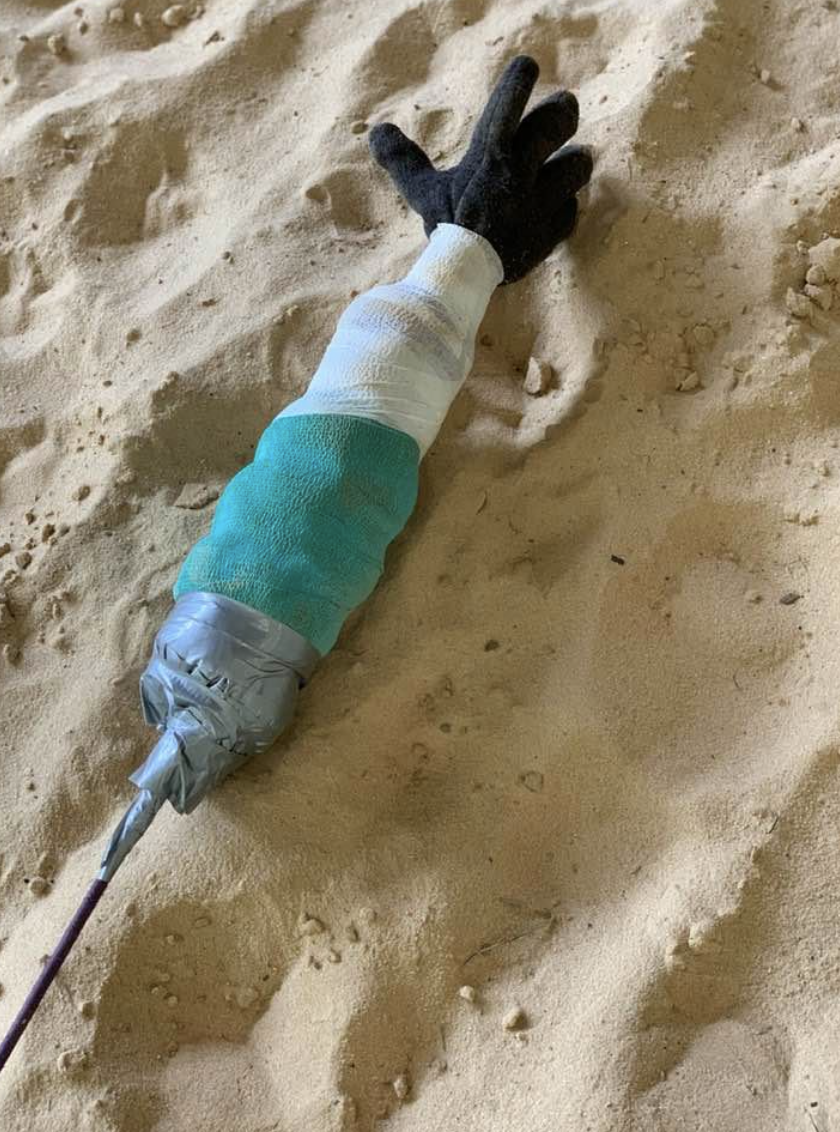
Fake Hand > Here is a picture from Babbie Styslinger and Brandy Jewell Dempsey. who came up with an arm extension that’s super light weight, noisy at times and has a soft landing on the horses body. It’s a crop wrapped in bubble wrap for weight and of course, some duct tape.
Clothes
Helmet - A helmet is the most important thing to wear when you are working with horses. Here are a few I recommend:
Tipperary Adult: https://www.amazon.com/Tipperary-Sportage-Helmet-Black-M/dp/B00TXLNY4Q/ref=sr_1_3?dchild=1&keywords=horse+helmet&qid=1600377218&sr=8-3
Boots - There are different style of boots, but overall, tennis shoes or closed toed shoes at a minimum, and here are some nicer boots for riding that I really like:
TuffRider Kids Paddock Boot (good for riding English or Western or just around the barn): https://www.amazon.com/TuffRider-Childrens-Starter-Front-Paddock/dp/B00354YIF6/ref=sr_1_5?dchild=1&keywords=horse+riding+boots&qid=1600377344&s=apparel&sr=1-5
Ariat Women's Paddock Boots (Great Brand Name): https://www.amazon.com/Ariat-Womens-Scout-Paddock-Medium/dp/B00F3M26T8/ref=sr_1_11?dchild=1&keywords=horse+riding+boots&qid=1600377404&s=apparel&sr=1-11
Ariat Child's Paddock Boots (Great Brand Name): https://www.amazon.com/Ariat-Girls-Scout-Paddock-Medium/dp/B00NUWKU3M/ref=sr_1_10?dchild=1&keywords=horse+riding+boots&qid=1600377404&s=apparel&sr=1-10
Child's Western Boot (Can be worn riding western or around the barn): https://www.amazon.com/Deer-Stags-Cowboy-Toddler-Little/dp/B00LWIHSYA/ref=sr_1_23?dchild=1&keywords=horse+riding+boots&qid=1600377404&s=apparel&sr=1-23
Women's Western Boots: https://www.amazon.com/Ariat-Womens-Heritage-Roper-Distressed/dp/B000EMKH4I/ref=sr_1_42?dchild=1&keywords=horse+riding+boots&qid=1600377404&s=apparel&sr=1-42
Men's Clothes
A man I follow on Instagram @man.on.horse (Stewart Turner) posted this list of great clothing he recommends:
My longest lasting reasonably priced breeches are from @harry_hall_riding as are my base layers.
Long sleeve polo and sweater I wear most is from @muddymareclothing .
I opted for financial reasons to buy paddock boots from @dublinclothinguk and half chaps from @mountainhorseofficial and they're both going strong two years now.
If you want to spend up and look really smart, then Tommy Hilfiger has just introduced an equestrian range @barneyandbaxtersports .
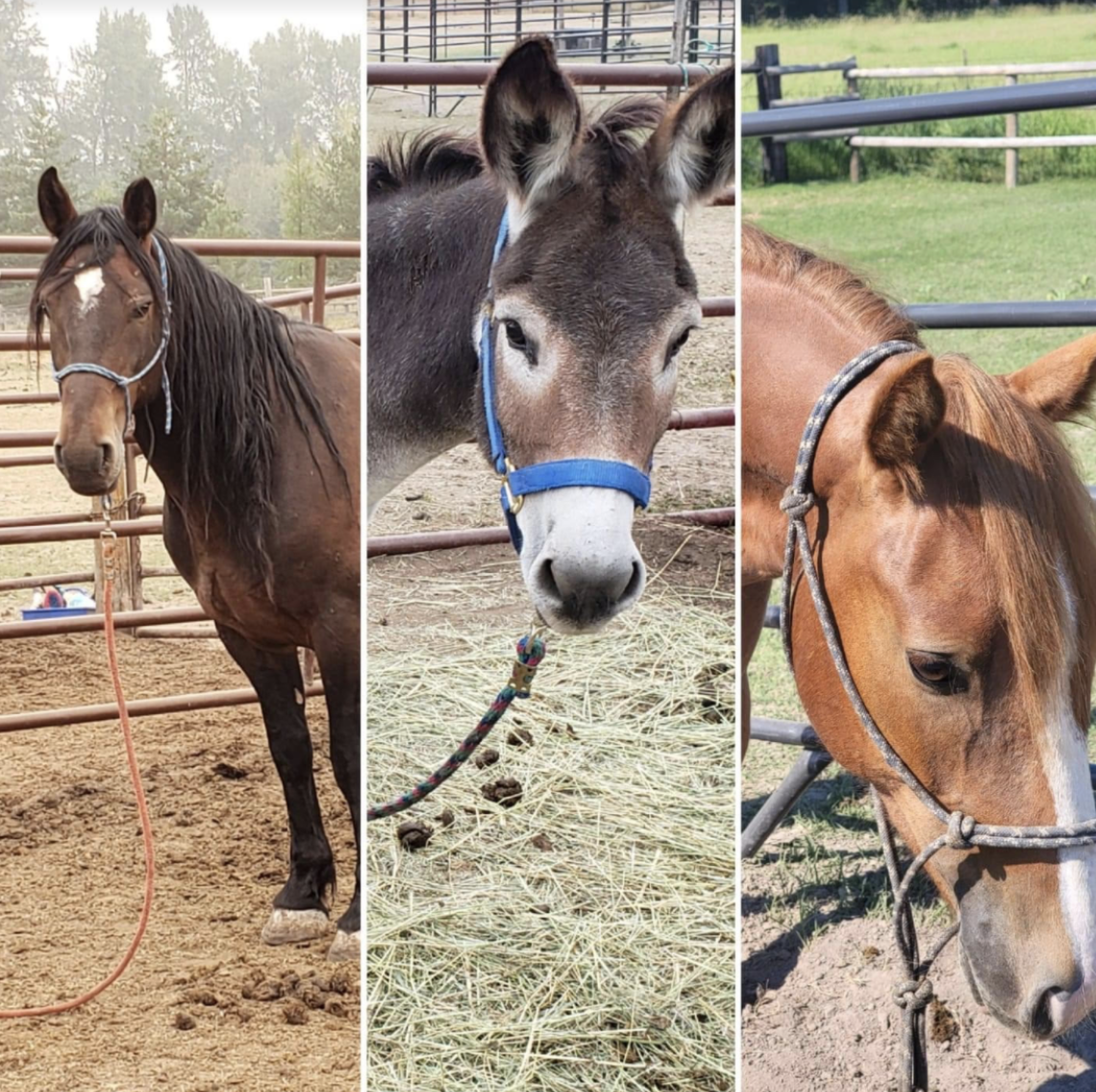
To Halter or Not to Halter at BLM Pick-Up Facility (Or when you get your mustang home from a TIP trainer)
From Christine Herman Indigo Farm:
To halter, or not to halter. That is the question.
I get asked frequently by people not just picking up their TIP animals, but those who are looking to get a wild one from a facility or adoption event, if they should have their horse haltered and leave it on for a while.
While I myself can walk up to and halter a naked faced TIP horse or burro at any time and do so with little to no fuss, I do remind my adopters that they are about to take this animal to a completely new environment with all new people and it may be shy the first few days.
If they are concerned about the animal and their ability to catch it, try leaving the halter on for a day or two, just to set yourself up for success as long as the animal is going to a SAFE environment where having the halter on is not a problem (hopefully). But, being able to approach and halter/unhalter shouldn't take more than a day or two for their new TIP animal.
As for wild ones, this is where I get frustrated with people. Mind you, I was new to WILD Mustangs just 2 short years ago. And since then, I've dealt with dozens of horses and burros through my TIP program and I've tried several different methods of halter starters.
My first 3 TIP Mustangs I had haltered at the facility and drag ropes put on. The next day (day 1 of work) I was able to remove the neck tag and drag line of 1 horse.
Day 2, I was able to remove the halter of horse 1, horse 2 I didn't get much further with, and horse 3 had her drag line wrapped around a post, must have pulled back and the VERY old crappy nylon halter I had used thankfully had broken at the buckle and she was standing there naked faced and injury free.
On day 5, horse 2 hooked her halter on a gate hinge and removed it herself by simply pulling it over her ears.
The next year, I had a horse get sores on his nose within 2 days because the halter was put on too tight at the facility, (mind you, MOST of these horses are NOT standing still and it's hard to fit a halter accurately to a moving target all while positioned above their heads) and while he had wiggle room on first appearance, as he ate hay, his mouth opening and moving around to chew made the halter tight and he was rubbed from it.
Winter of this year, I had 2 haltered horses with drag lines but the snow, mud and ice caused MASSIVE ice balls (bowling ball size) to form on their drag lines that they now had to pack around.
These are just a FEW of my personal experiences of the BAD that can happen with halters and drag lines, and in a SHORT time span.
Now I'm not saying NEVER get your horse haltered or drag lined, however I want to stress the URGENCY in which you NEED to be able to deal with an emergency should it arise from them wearing one.
If you do not have the skills to be able to remove that drag line from the horse in a couple days and get up to snap a lead line on, please don't have a drag line put on. If you don't have the skill to get up and remove that halter within a week, please don't have a halter put on.
For some reason, people think the ONLY way to train a horse is to have a halter on it. And while it sure can make it easier if you know how to utilize this "cheat code" we'll call it, it can lead to disaster more times than not. I get asked by people to "Please come halter my horse! I can't get a halter on it and I just KNOW if he's haltered, I can train him!" You guys, I have 90% of my TIP animals haltered between day 1 and 5, with the random few who are a little more skittish taking a little longer to get up to.
During the time that I haven't been successful in approaching them to put a halter on, we. Are. Still. Working! I'm teaching them sending, yield the hind quarters, move their shoulder, face up, turn into me, etc and if I haven't gotten the halter on today, we're going to repeat all those lessons tomorrow, but I'm going to work in CLOSER. And the next day, CLOSER until... **gasp** look at that! I'm touching them and prepping them for haltering!
If you really think there is NO way you can train your wild horse without it having a halter and 20 foot drag line on, then PLEASE seriously rethink getting a totally wild one. Again, not saying you shouldn't halter, but thats why I gave examples of my own experiences. What if they get their halter off the next day? What if it's causing injury from being too tight or them stepping on the drag line? Have a plan, get help, pretend during your training session that they don't have a halter and line on. How would you approach them?
Currently, I have nothing haltered at facility anymore, and I rarely use a drag rope. It's horse specific on if I leave the halter on or take it off daily. But if I do choose to leave it on, I know I am skilled enough to go take it off if I need to.
Rule of thumb I like, if you don't think you have the time and skill to work with the horse consistently enough to unhalter in 1 week, then don't halter. If your plan is to turn them out in their pen and you "sit and read a book to them to earn their trust," and you are going to "take your time," then Do. NOT. Halter. If you have all the time in the world, what does it matter that that horse has head gear on TODAY?
The horses safety and comfort come before my need to use a "cheat code." Aquire the knowledge you need to be successful wether they are haltered or not. I promise you won't regret taking the time to educate yourself, but you WILL regret getting into a situation where your horse or burro needs your help, and there is nothing you can do about it. Thanks for reading!
Training Methods/Trainers We Know and Love (and Borrow From Frequently)
-Pat Parelli’s Savvy Club (Seven games are great, stick/string desensitization)
-Mustang Maddy (positive reinforcement, "Mystic Experiment" YouTube method)
-Sam VanFleet
-John Lyons
-Justin Dunn (5 part series for lunging)
Not Expecting First Touches Right Away - Respecting The Horses' Space
So let's talk again quickly about the space that you have set up for your horse. Ultimately 6 foot tall panels are ideal but 5 foot tall panels work also. Having two gates or openings is also ideal but one is OK too. You can see in our videos that when we work with horses, they need to have enough space to move their body from one area to the other area in order to communicate effectively and safely. I really like the space to at least be 24‘ x 24‘. If it’s less than that like a 12‘ x 12‘ stall you just have to do everything half as fast so that you can gauge their reactions. Having a bigger space allows the horse to communicate with you on their terms but you want to make sure that the space isn’t too big. I would say a 50 foot round pen or a bigger pasture would be too big to start, as they may just find a lot of reasons not to want to be near you and it will be harder to get them to focus.
The "Bubble"
So like we have our personal space, horses do too. They have a “bubble” about 3 feet around them in every direction. When a new horse comes to you that bubble is three or four times bigger than that and shrinks over time. You have to respect that bubble until they allow the bubble to get smaller. You will know when the horses bubble gets smaller based on how they react to what you’re doing with them and how they are coming to you. They also may have a bigger bubble for certain people than they do for others. Some horses prefer men over women or children over grown adults. Some just appreciate a calmer energy going slow and some appreciate a person just nonchalantly going about their business. You will know how the horse reacts to you and each person and horse is different.
Schedule a Good Veterinarian and Farrier to Come ASAP
You can use google to find local vets in your area and read reviews on their care. Asking local friends who own horses or at your local feed shop will help you decide as well on a great vet and farrier. HERE is a great article on how to choose a good vet. Have their numbers handy at all times and posted in your barn!
Vet - Schedule a check-up for the vet to look your horse all over and take bloodwork if they think it is necessary. Ask them about their overall diet and exercise plan and ask any additional questions you have.
Farrier - Your vet should be able to give you a few good farrier recommendations. Make sure to tell them if your horse is new to farrier-work. This will be a gentle process and you need to find a patient farrier! The first few visits may be more "introduction" and not really actually foot maintenance until your horse is comfortable.
Give Ample Amounts of Water
Some people use a 50 gallon bucket and fill it once or twice a day, some people use a 100 gallon bucket and check it each day. Others (if you have a barn or stalls) use automatic waters that fill from the hose each time the horse takes a drink. Make sure you have a way to tell if your horse is drinking water. If they are not, they may be very sick. When they are not feeling well, I usually put a bucket of water out for them so I can monitor how much they are drinking throughout the day.
Our Ideas/Beliefs Around Training
-We always honor the horse, giving it the time it needs and never using force or restriction as a training method. Lots of give and take.
-Never end on a bad note. Baby steps are key, and once you accomplish a baby step, celebrate!!
-Always put tack & training tools back where you found them, clean, neat and tidy.
-Using treats during positive reinforcement sessions and at the end of any session to reward a horse is great, just be sure they are polite and if they are not, wait until their face is in a neutral position (not begging) to give the reward.
-Wear gloves and a helmet!
-Never give up, on people or horses! Spend more time trying to understand their point of view, patience is key!!
Preparing to Introduce Yourself
There are things you can do before you go into the pen that can shrink your horses bubble. Walking by the pen on the other side of the fence, putting their hay in their hay feeder, cleaning their stall from the outside, "fixing" gates (real or pretend) or panels, or having other horses nearby are all things that new horses have to get used to. They have to get used to the sights and the sounds that are around them before they can really focus on you and communicating affectively.
You can also use a stick or a training tool or a flag if they’re comfortable with that to rub and pet them from the outside. You want them to come up to your tool curiously in order to get the best response and bond over time. You never want them to be afraid. Ignore nervousness and praise bravery. Never go into the pen if they’re still nervous about you walking by the outside or putting an object in the pen.
Once you can walk by the pen and do chores and maybe feed the horse a carrot or some hay from outside the pen you know you’re ready to go inside to introduce yourself. Watch the clip to see TM Horsetraining showing their horse named Chance, a 1 year old (in this video) gelding from Snowstorm Mountain HMA. You can see how they are touching it outside the pen with a long whip to get the horse used to their touch before entering!
Do you feel prepared to bring your mustang home? Are you excited to see if it will eat hay from your hand? Do you understand the "personal space bubble" of a new horse and how to watch for signs that their bubble is shrinking?
24-Page Downloadable Guide
https://www.whitmirecoaching.com/mystery-of-the-mustang-guide
Part 1: Guide to Bringing Home Your First Horse
https://www.whitmirecoaching.com/blog/mystery-of-the-mustang
Part 2: The Ultimate Mustang Mission
https://www.whitmirecoaching.com/blog/ultimate-mustang-mission
Part 3: Inspirational Stories From Mustang Owners
https://www.whitmirecoaching.com/blog/inspirational-mustang-stories
Part 4: Options For Helping Mustangs
https://www.whitmirecoaching.com/blog/helping-mustangs
Part 5: Preparing For Mustang Adoption - What To Do (and Not Do)
https://www.whitmirecoaching.com/blog/preparing-for-mustang-adoption
Part 6: Best Shelters and Exercise Areas for Mustangs
https://www.whitmirecoaching.com/blog/mustang-shelter-exercise
Part 7: Feeding a Wild Mustang in Captivity
https://www.whitmirecoaching.com/blog/feeding-mustangs
*Part 8: Bringing a Wild Mustang Home - Final Preparations
https://www.whitmirecoaching.com/blog/bringing-home-wild-mustang-horse
Part 9: Wild Mustang's First Week Home - First Touches